

Knowledge base › Survey guide
Survey guide
Why does echo sounder ping rate matter?
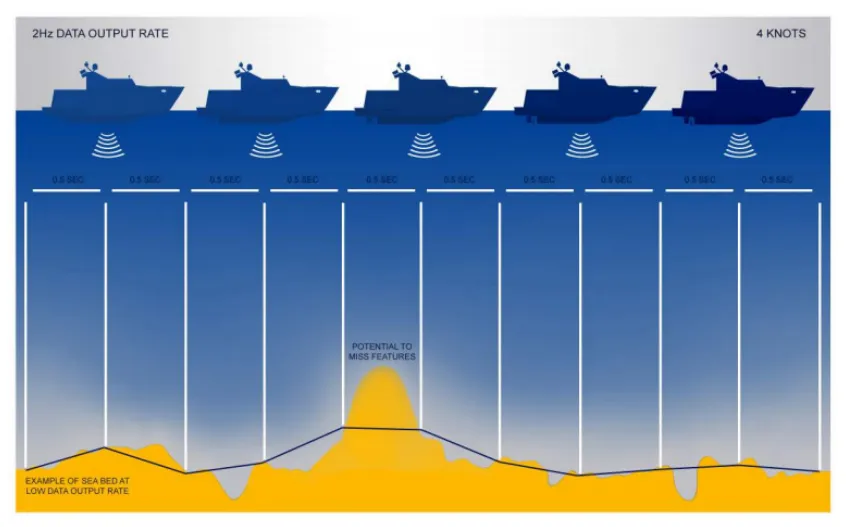
Ping rate sets how far apart your soundings are along the track. At 4 knots a 2 Hz echo sounder puts them 1 m apart, so every bad sounding leaves a gap; at 20 Hz they’re 10 cm apart, so you can throw away 75% of the data in weed or noise and still have 2.5 times more than the 2 Hz unit.
1 m spacing at 2 Hz
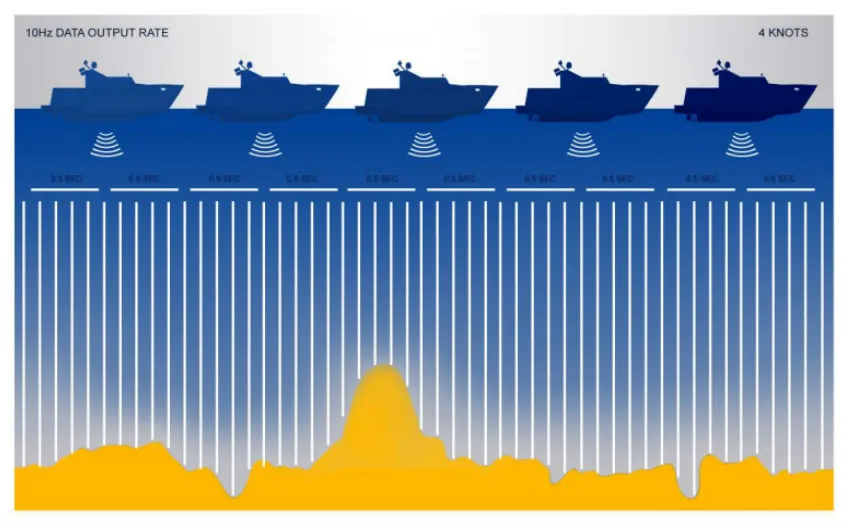
20 cm at 10 Hz
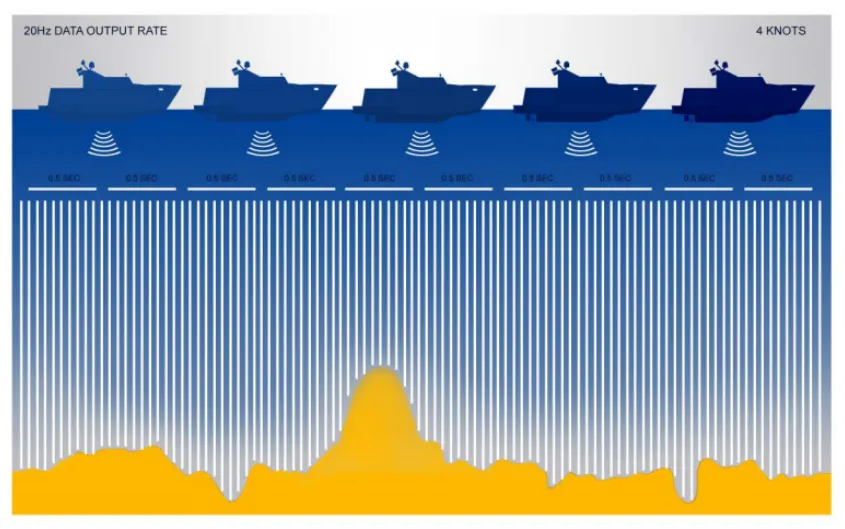
10 cm at 20 Hz
4 kn boat speed in the example
Echo sounder data is collected from a moving boat, with pings at a fixed interval, so the ping rate sets the distance between soundings along the track. It’s an important but sometimes overlooked specification.
How far apart are the soundings?
| Ping rate | Spacing at 4 knots | Typical echo sounder |
|---|---|---|
| 2 Hz | 1 m | Basic echo sounder |
| 20 Hz | 10 cm (3.9″) | CEE-LINE HD™ |
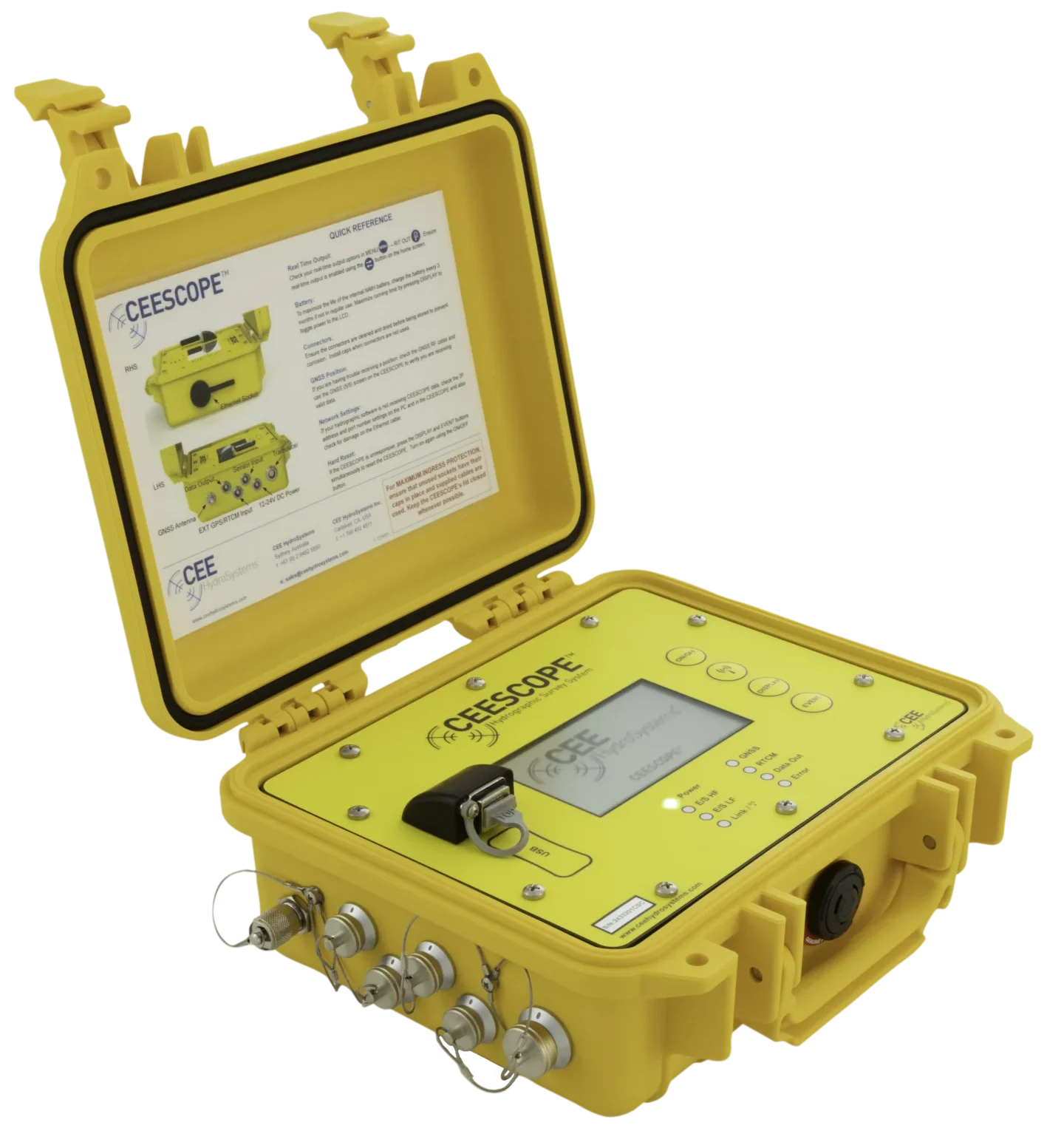
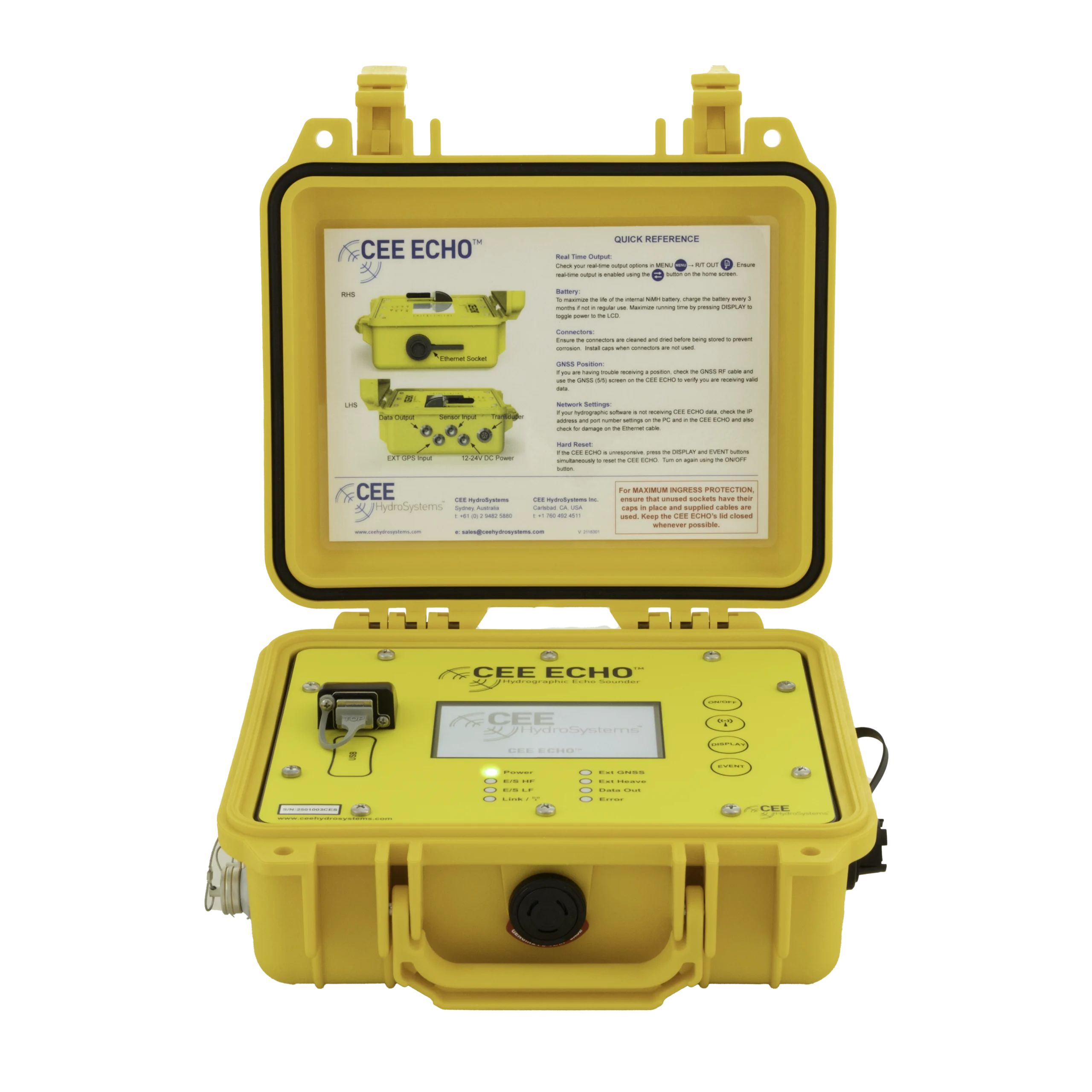
| 20 Hz | 10 cm (3.9″) | CEE ECHO™, CEESCOPE™ (original note) |
| 30 Hz | about 7 cm | Current CEE ECHO™ and CEESCOPE™ maximum |
2 Hz: no room for bad data
Soundings 1 m apart is very sparse coverage, even if every sounding is good. Features may be missed, and there’s no room for bad soundings. Any missing or unusable results (from poor bottom detection, mid-water echoes or vegetation) leave gaps several metres long or more. In dense vegetation there may not be enough good soundings to tell the real bottom from the canopy at all.
10 Hz: much better
At 20 cm spacing, coverage along the track is acceptable for feature detection. Even with half the points removed by heavy thinning, the data is still likely usable.
20 Hz and above: room to edit
At 10 cm spacing there’s more coverage and bottom detail, but the bigger benefit is resilience. Where bottom detection is very difficult and a 2 Hz echo sounder would almost certainly fail, a 20 Hz echo sounder still gives enough points to find the real bottom, keep good coverage and produce an acceptable result, even after removing many soundings.
Removing 75% of the soundings at 20 Hz still leaves 2.5 times more data than a 2 Hz echo sounder with no thinning.
So what ping rate do I need?
For surveying swimming pools, a low ping rate is fine. In real-world conditions, a higher ping rate gives you the best chance of a good survey in the widest range of conditions. See surveying in vegetation for why it matters most in weed.
Equipment used
Talk to US
Need a hand with your set-up?
Our engineers answer survey questions every day.