

Knowledge base › Survey guide
Survey guide
How does transducer beam angle affect my survey data?
The echo sounder reports the first return anywhere in its beam. On a flat bottom that’s straight down, but on steep slopes or near structures a wide beam hits the high side first and reads too shallow. Narrow 200 kHz beams (3–9°) are best for slopes and bridge piers; wide low frequency beams (19–25°) cover more ground, which can help when searching for objects.
3 blanking modes
≥10 m use MANUAL
0.2–0.4 m typical USV blanking
0.25 m short MINDEPTH setting
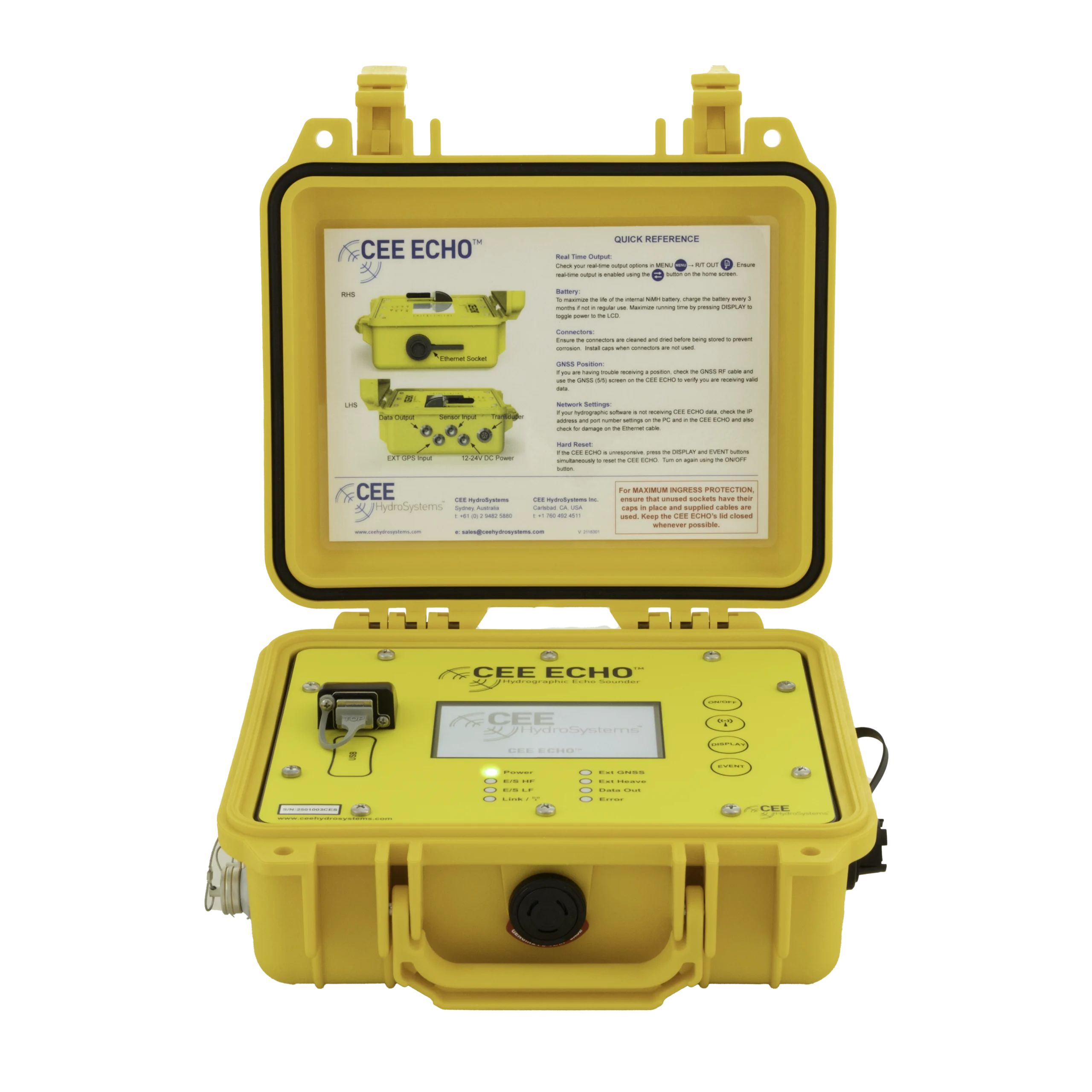
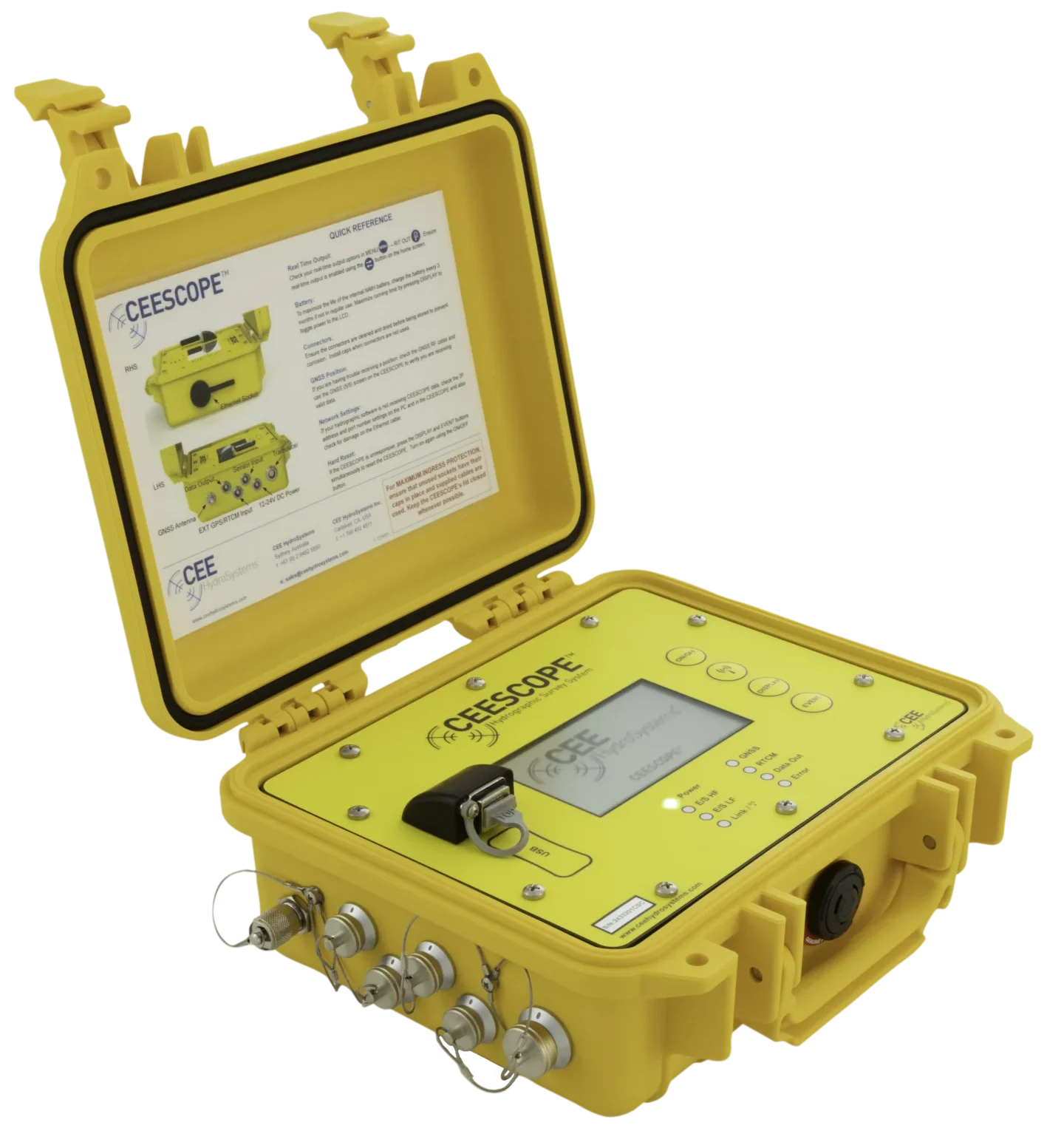
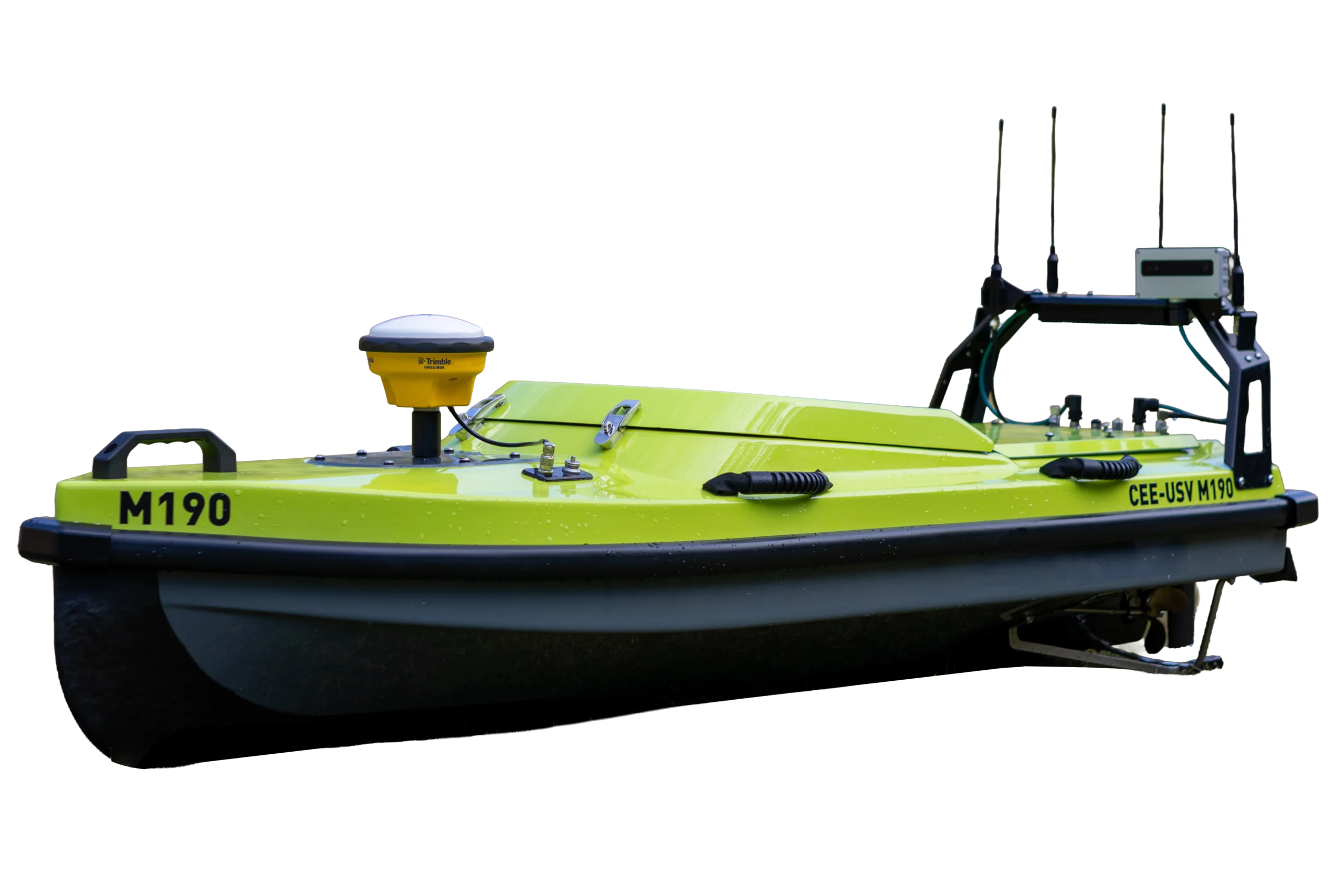
The CEESCOPE™ and CEE ECHO™ have three blanking modes: the traditional MANUAL, and two shallow water modes, MINDEPTH and ADAPTIVE. They were compared over the same track with the CEE-USV™, which has a draft of only 15 cm (0.5 ft).
What is the blanking distance?
It’s the zone directly under the transducer where the echo sounder ignores all incoming energy. If max depth is the deepest you can survey, blanking plus transducer draft is the shallowest.
The reason is transducer “ringing”. The same ceramic element sends the ping and listens for the echo, and its vibration after sending makes noise: the transducer is listening to itself. The noise dies away quickly, and that time, expressed as a distance, is the minimum blanking needed.
- Too short: the depth record spikes towards zero as ringing is taken as the bottom.
- Too long: no problem, except in shallow water, where depths shallower than blanking plus draft can’t be measured.
- As depth, turbidity or absorption increase, the echo sounder raises its power to keep tracking, and ringing increases too, so deeper surveys generally need longer blanking.
Set the mode and distance on the keypad: ES menu screen 2 (high frequency) and screen 4 (low frequency). MINDEPTH and ADAPTIVE are on the HF channel only. Older units can get them with 2020 or later firmware.
MANUAL (default)
Familiar from any echo sounder: you set a fixed distance. Recommended for all surveys where the maximum depth is 10 m (33 ft) or more. With the CEE-USV™ in very shallow water, blanking is typically 0.2–0.4 m (0.6–1.2 ft).
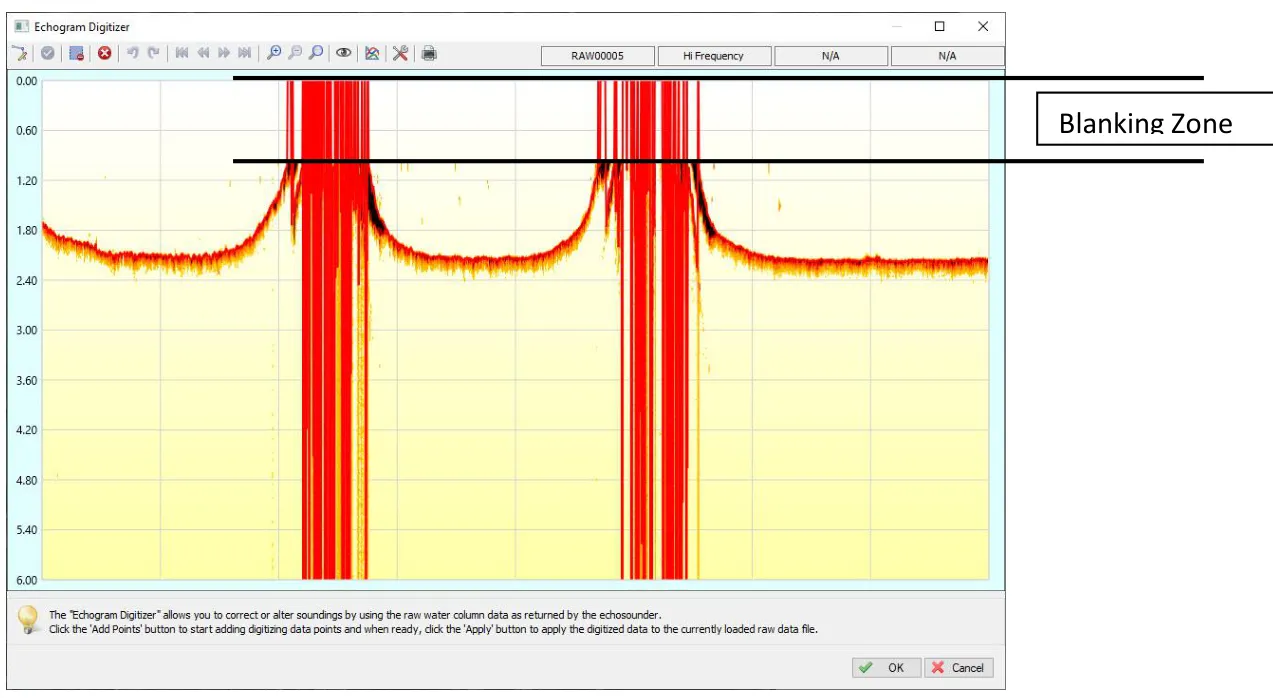
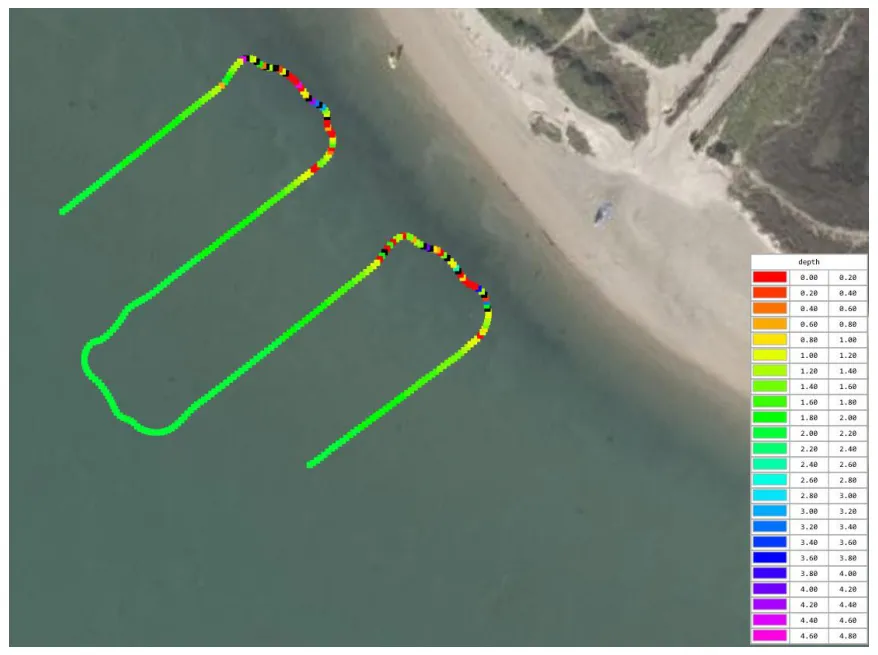
A deliberately long 1 m (3.3 ft) blanking shows what happens when the bottom rises into the blanking zone: the echo sounder can’t see the bottom, noise appears and usable data disappears. It picks the bottom up again quickly once it’s back below the zone, but there’s some lag, so slow down when leaving blanked areas.
Why does it sometimes read double the depth?
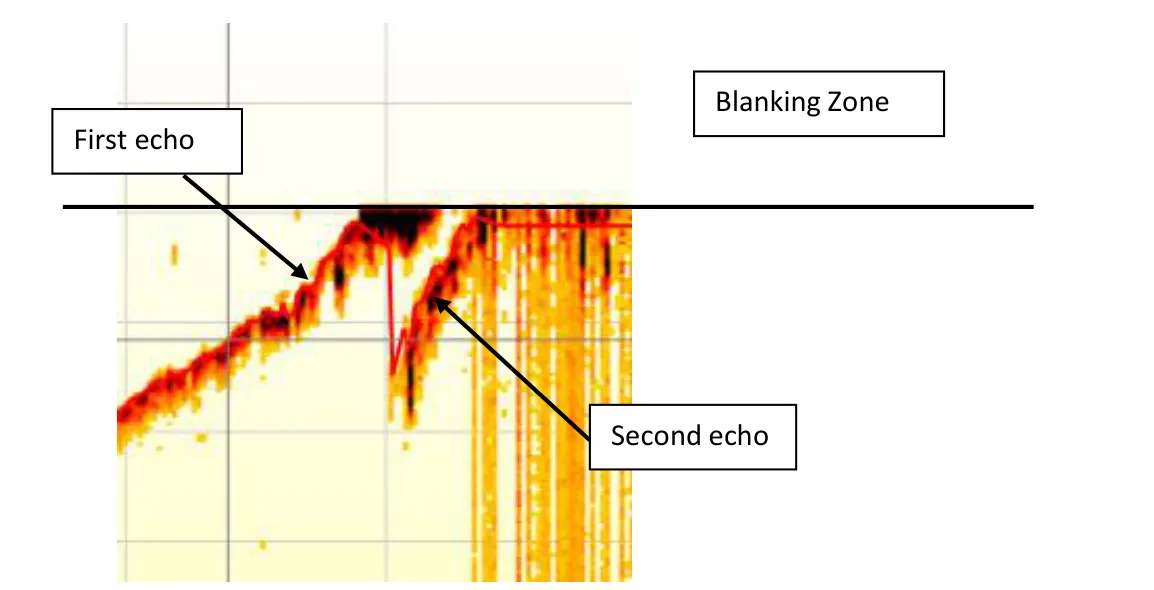
On some bottoms the ping bounces off the bottom, up to the surface and back down, giving a double (or triple) echo after two trips through the water. When the real bottom enters the blanked zone, the double echo may be all the echo sounder can see, and it often tracks it, giving a steady depth at twice the real one. (It’s only exactly double when the transducer draft is zero.)
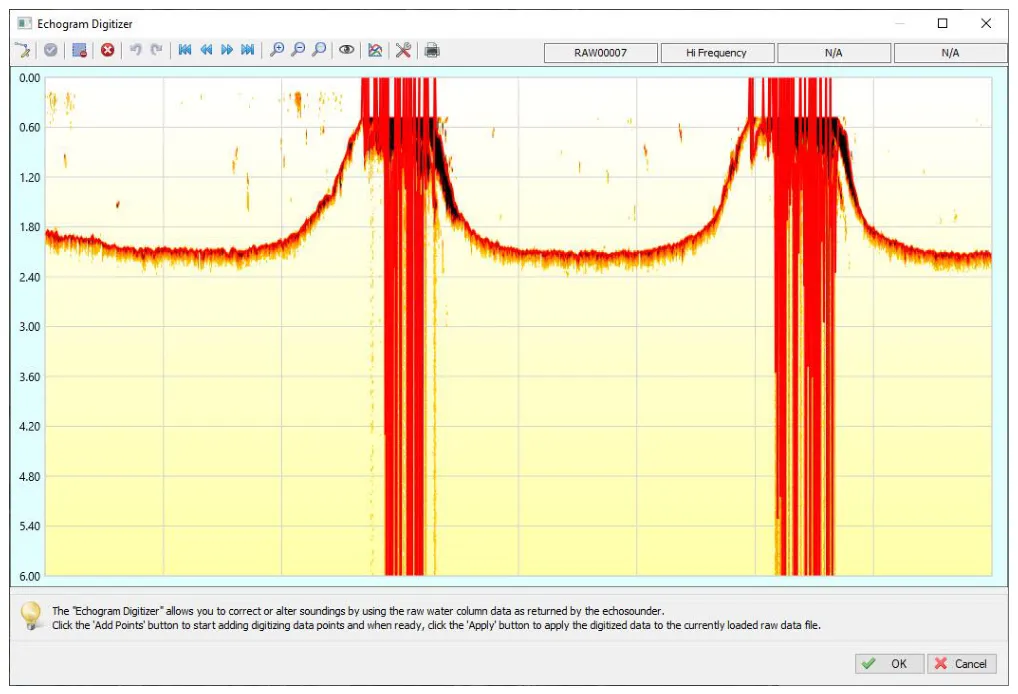
With 0.5 m (1.6 ft) blanking the behaviour is the same, but more of the bottom is mapped because 0.5–1 m depths can now be seen.
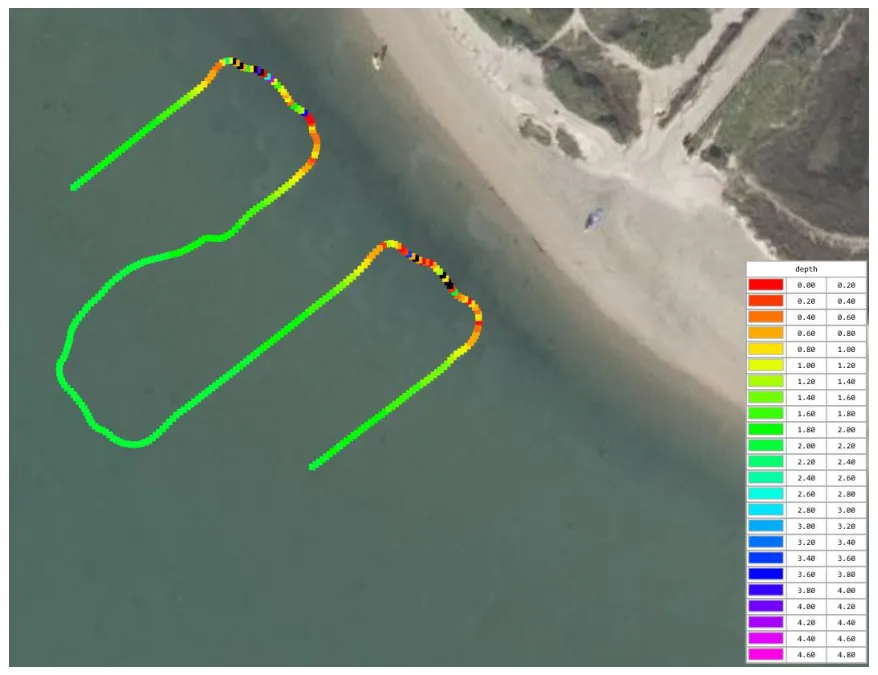
MINDEPTH
You still set a blanking distance, but when the bottom moves inside it, the depth output goes to zero. That removes the noise seen in MANUAL mode, so editing is easier: no despiking, just delete the zeros.
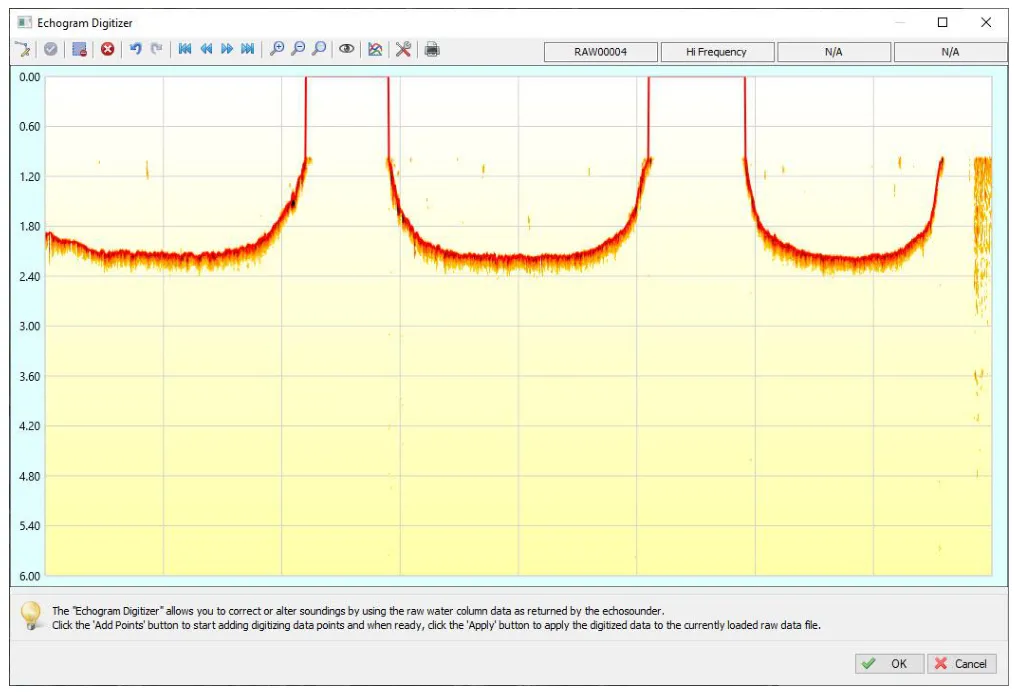
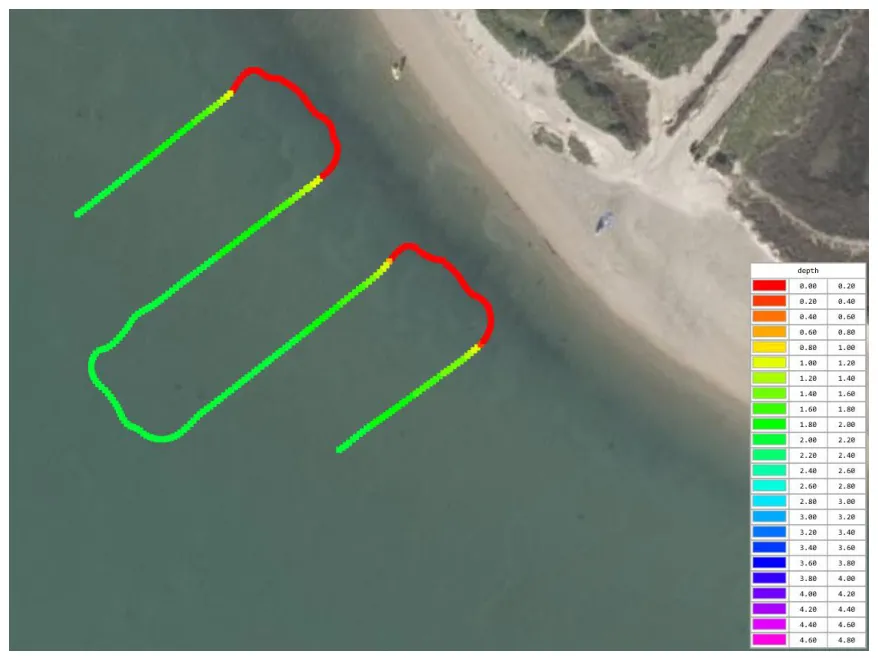
Best for very shallow water: MINDEPTH with a short blanking distance gives the cleanest data. With 1 m blanking much of the data is lost, but on USV surveys working at the limit, around 0.25 m (0.8 ft) with MINDEPTH gives clean data and maximum coverage.
ADAPTIVE
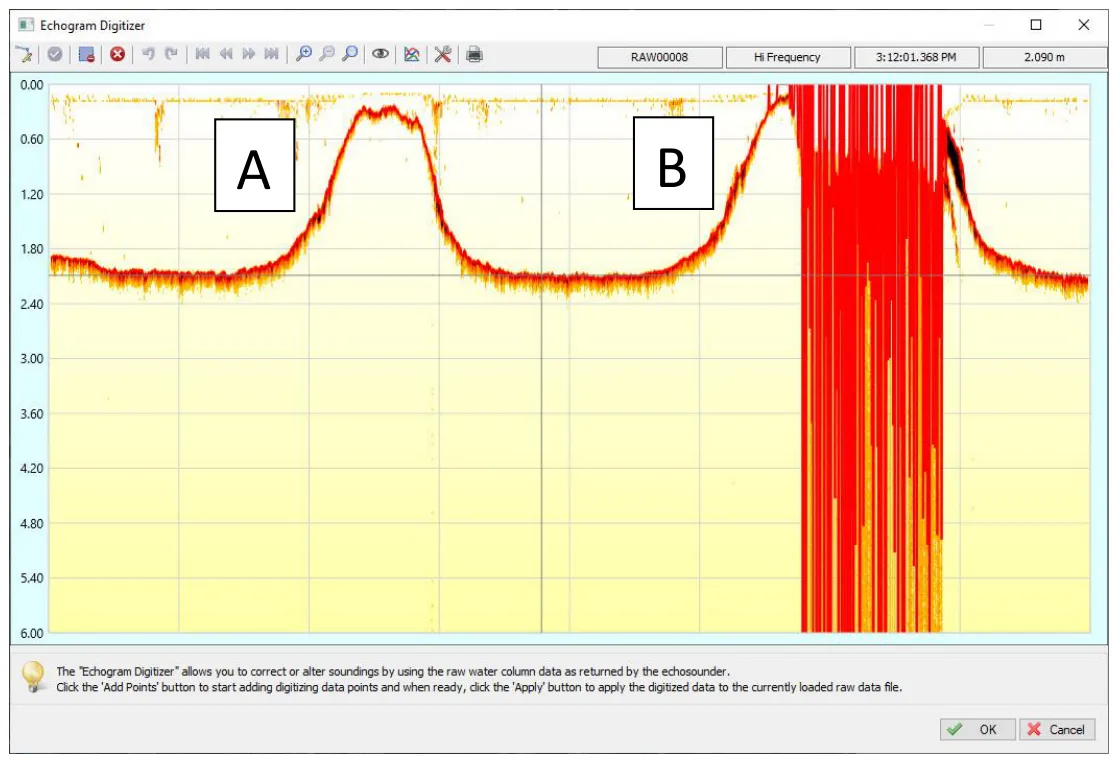
No blanking distance to set: the echo sounder adjusts it automatically to the ping, getting the minimum possible blanking for the conditions. But if the bottom enters the blanked zone, unlike MINDEPTH, there is significant spiking until the bottom is found again.
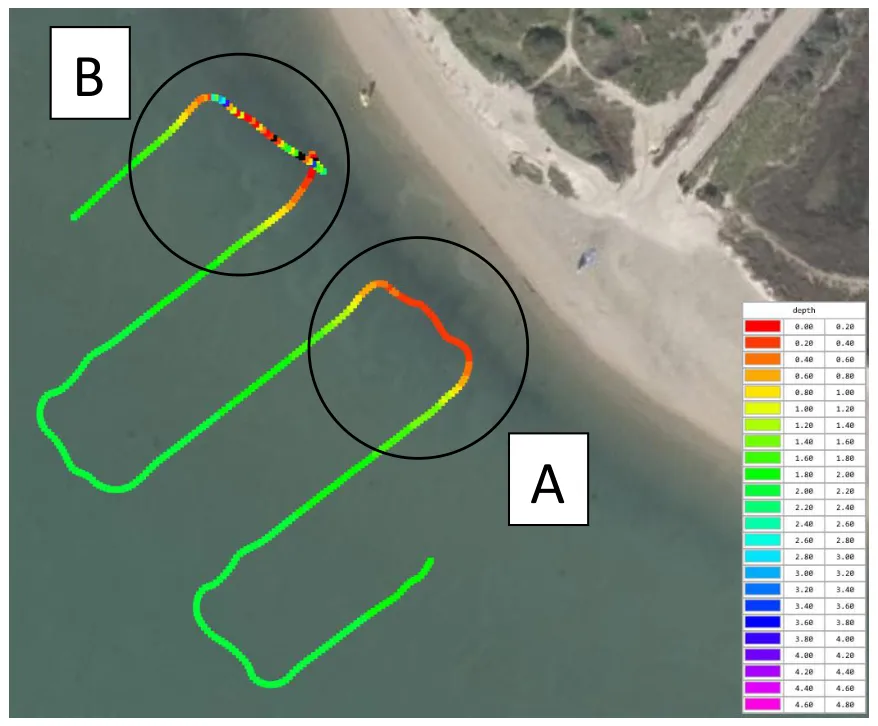
In Figure 8, on pass A the bottom stayed below the minimum measurable depth and was tracked at around 25 cm (0.8 ft). On pass B the boat was deliberately beached and driven through water under 20 cm (0.6 ft) deep until the bottom was found again at about 40 cm (1.3 ft).
Summary
| Mode | You set | Bottom inside blanking zone | Best for |
|---|---|---|---|
| MANUAL | Blanking distance | Noise / spikes | Surveys 10 m (33 ft) deep or more; general use |
| MINDEPTH | Blanking distance | Outputs zero | Cleanest data in very shallow water, e.g. USV at 0.25 m |
| ADAPTIVE | Nothing (automatic) | Significant spiking | Shallowest possible measurements |
Equipment used
Talk to US
Need a hand with your set-up?
Our engineers answer survey questions every day.