

Case histories › Case history
Case history
Trimble RTX for accurate wastewater sludge comparison surveys with the CEE-USV™
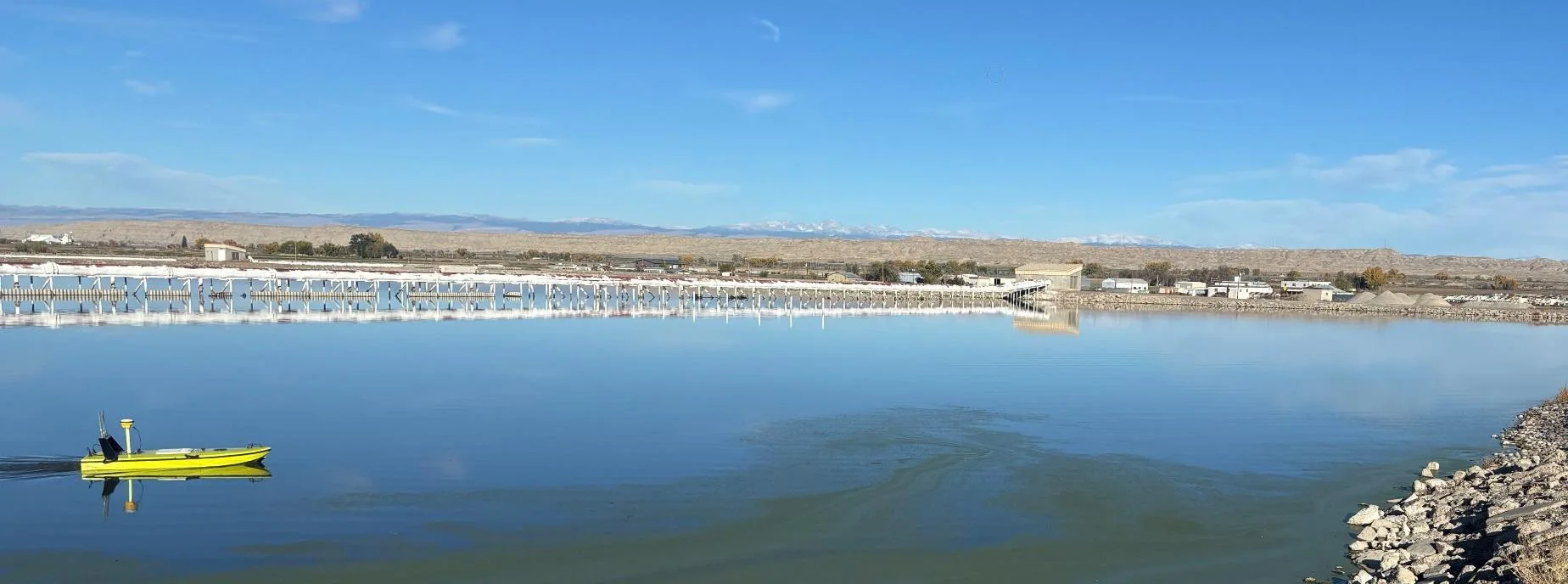
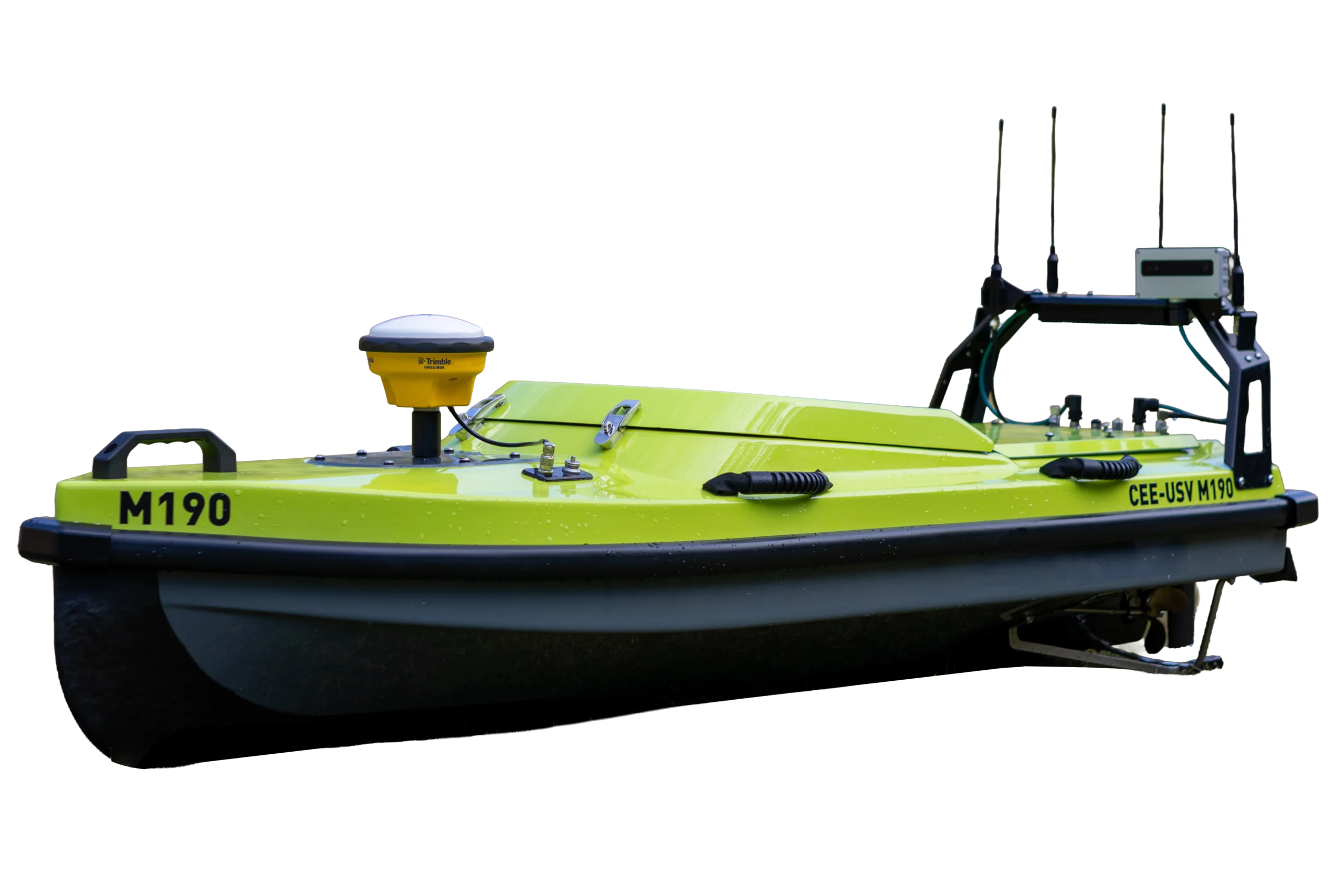
Team Lab monitors sludge in hundreds of wastewater lagoons with the CEE-USV™. Adding a CEESCOPE™ with Trimble CenterPoint® RTX in 2025 gave about 1 in (2.5 cm) vertical accuracy for the lagoon water level on every survey, so repeat surveys compare sludge volumes accurately without anyone going out on the water.
At a glance
- Client
- Team Lab
- Location
- Minnesota, USA (lagoons mostly in the upper Midwest)
- Application
- Repeat wastewater lagoon sludge volume surveys
- Equipment
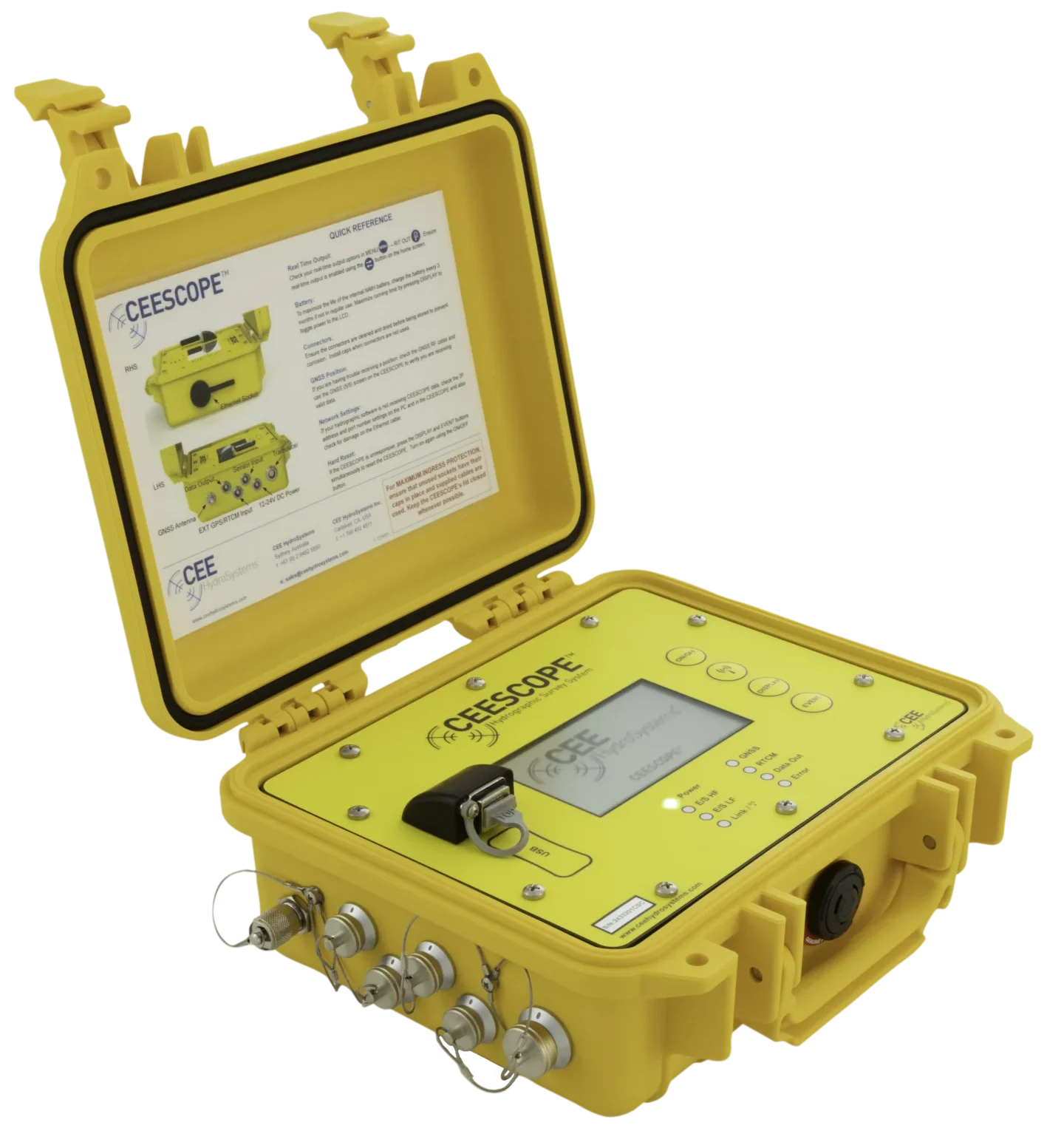
- CEE-USV™ with RTK CEESCOPE™ (Trimble BD9250 with CenterPoint® RTX)
- Software
- Hydromagic
- Program
- CEE-USV™ since 2021, Trimble RTX since early 2025
About Team Lab
Team Lab, of Minnesota, USA, has supported industrial and municipal wastewater management since 1977. It supplies chemical and biological treatment programs that reduce the volume of sludge in effluent lagoons.
Accumulated sludge reduces the effluent’s residence time in the lagoon, making the basin less effective, and mechanically removing the hazardous sludge is expensive.
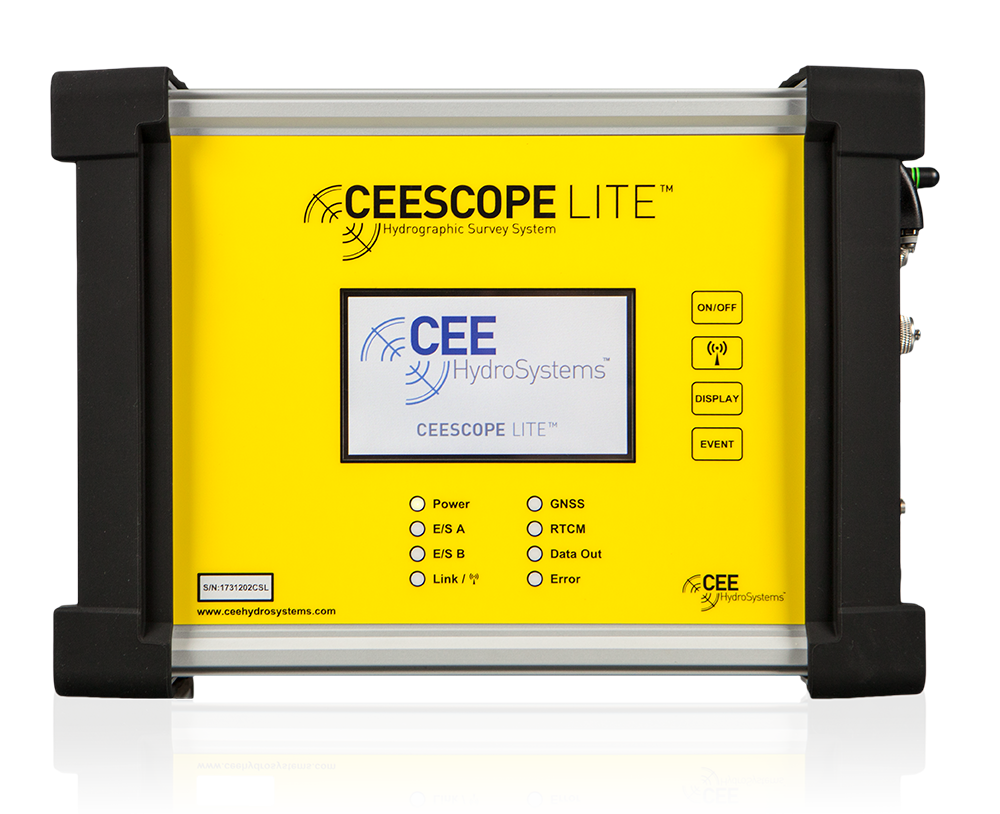
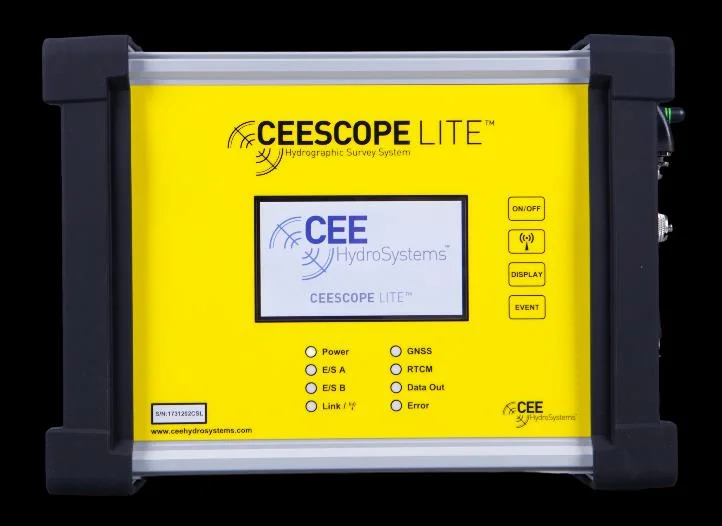
In 2021, Team Lab started an effluent lagoon bathymetry program with the CEE-USV™ survey boat to monitor sludge levels in hundreds of wastewater lagoons, mostly in the upper Midwest. The USV was first supplied with an integrated CEESCOPE™ echo sounder and differential-grade GNSS giving submeter horizontal accuracy.
The problem
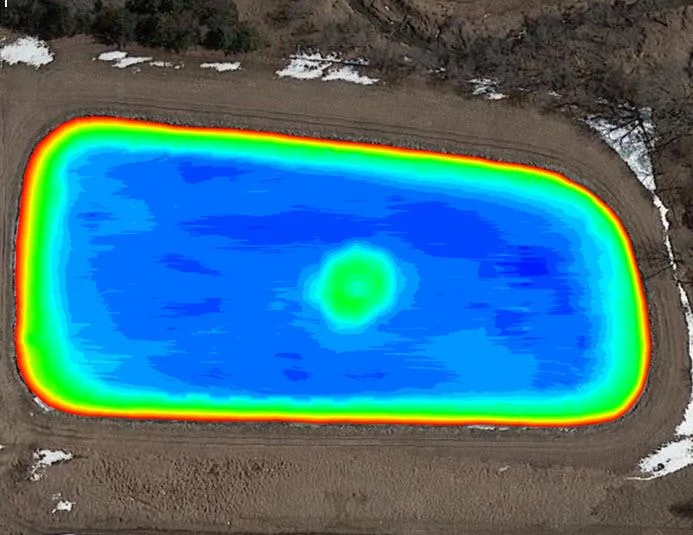
The first two years of surveys mostly established baseline sludge levels. As the program progressed, more surveys were repeats, monitoring changes in sludge height and volume, often during an active treatment program.
The CEESCOPE™ maps water depth to 0.1 ft (2 cm). To measure changes in sludge volume, though, any change in lagoon water level between surveys must also be known, and municipal wastewater lagoons have no level monitoring. Team Lab had to measure the water height above the lagoon’s true bottom with a range pole on every survey.
So even with a remotely operated boat doing the depth survey, a surveyor still had to go out on the water, with the safety and efficiency drawbacks that brings. And because sludge height may change by only a few inches, errors in the water height measurement could have a big effect on the calculated sludge volume.
- Local RTK base: setting one up for precise heights at each of hundreds of lagoons would take too much extra time.
- Network / VRS RTK: not reliable, with poor cell phone coverage at some sites.
- Ease of use: the system had to be easy for Team Lab staff to run without specialist knowledge or training.
The solution: Trimble CenterPoint® RTX
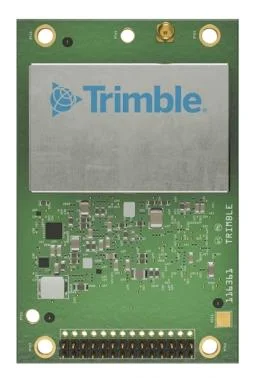
In early 2025, Team Lab bought a new RTK CEESCOPE™ with the Trimble BD9250 OEM receiver and L-Band CenterPoint® RTX. Subscription corrections measure the lagoon water level accurately and automatically during each survey, for the most accurate year-to-year comparisons.
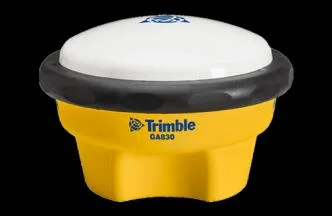
RTX is a precise point positioning (PPP) solution. GNSS positions from multiple constellations are corrected in real time by a separate correction signal from a geostationary L-Band satellite, received by the same GNSS antenna.
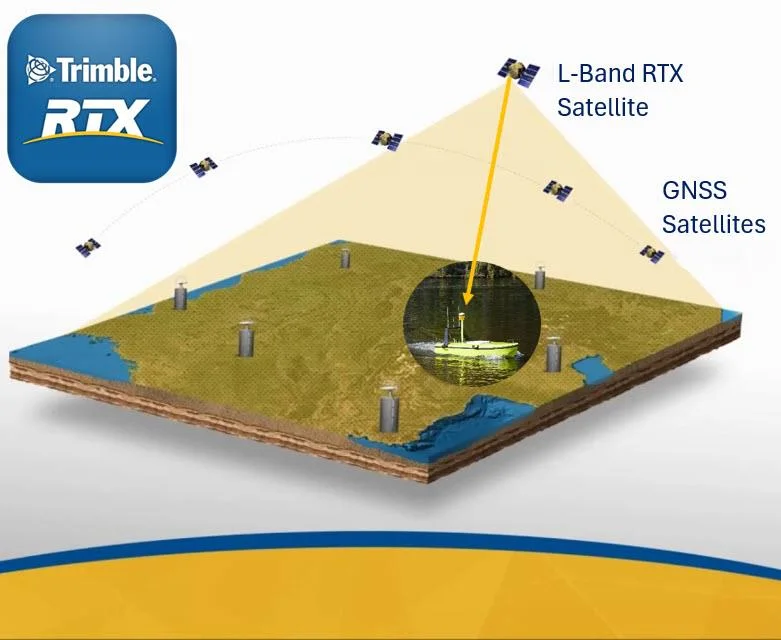
How the water level is measured
With vertical accuracy approaching 1 in (2.5 cm), RTX meets the requirements for wastewater sludge comparison surveys. It takes only a few minutes to reach this accuracy, so no time is wasted waiting for the solution to converge.
- Hydromagic records RTK elevations throughout the survey while the autopilot-controlled USV runs its lines.
- In processing, all water surface elevations over the typical 0.5–2 hour survey are averaged to a single water level.
- That water level is applied to the whole depth dataset, giving a final sludge elevation surface that can be compared in absolute terms with later surveys.
The benefits
~1 in(2.5 cm) vertical accuracy
A few minto converge
0trips onto the water after the first survey
CenterPoint® RTX was a perfect fit for Team Lab, combining simple operation with the accuracy needed to detect small changes in sludge level. Once the lagoon’s true bottom below the sludge has been established on the first survey with RTX in use, no further trips out onto the water are needed. With time-averaging refining the dataset further, Team Lab has built a capable and highly defensible monitoring program for its lagoon treatments.
Planning a similar survey?
Tell us about your site and we’ll recommend the right equipment.
Talk to us →
More from the field
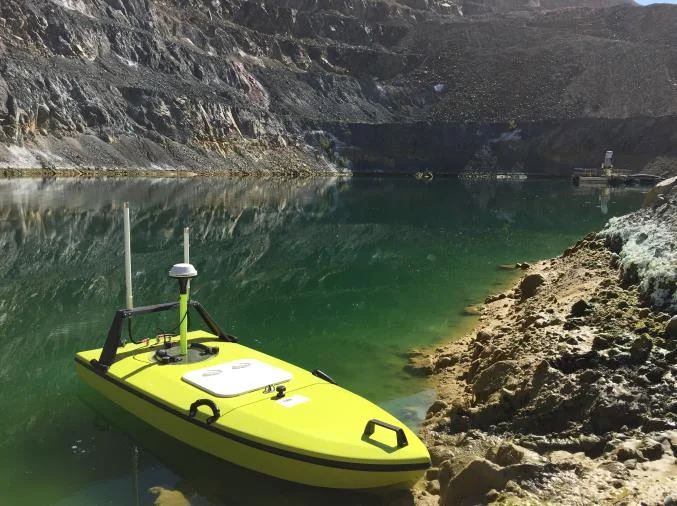
17 Sep 2023
Surveying industrial water with single beam echo sounders and USVs: mine water, frac pits and effluent ponds
How single beam echo sounders and unmanned survey boats are used for industrial water management: reservoir volume, sludge and sediment, and regulatory reporting. Worked examples cover mine tailings storage facilities, frac pits and effluent lagoon dredging.
How single beam echo sounders and unmanned survey boats are used for industrial water management: reservoir volume, sludge and sediment, and regulatory reporting. Worked examples cover mine tailings storage facilities, frac pits and effluent lagoon dredging.
Read case history →
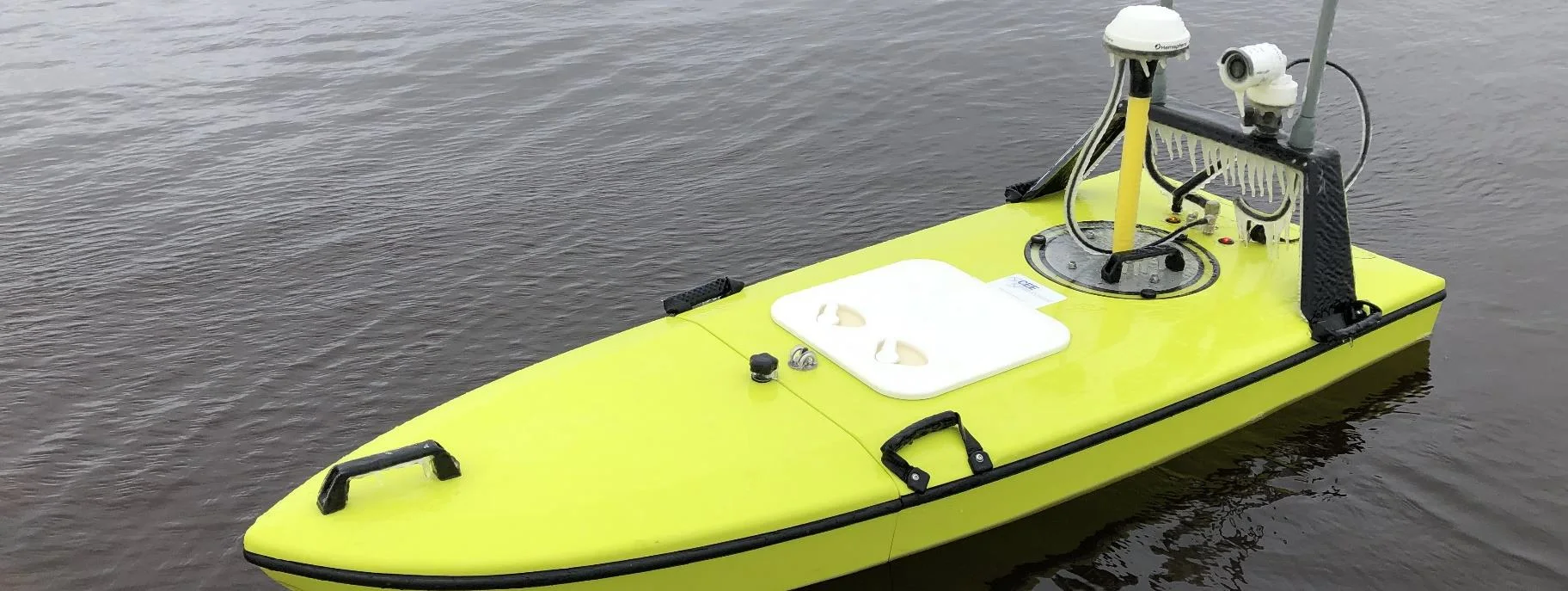
29 Apr 2022
CEE-USV™ surveys a wastewater lagoon in 45 mph winds and sub-zero temperatures
Midwest Planning LLC ran a CEE-USV™ survey of a Minnesota wastewater lagoon in late April, in 45 mph gusts and sub-zero temperatures, with the surveyor operating from a warm truck. Ice on the antennas caused some data drop-outs, but the on-board CEESCOPE LITE™ logged everything, so any gaps could be filled in Hydromagic.
Midwest Planning LLC ran a CEE-USV™ survey of a Minnesota wastewater lagoon in late April, in 45 mph gusts and sub-zero temperatures, with the surveyor operating from a warm truck. Ice on the antennas caused some data drop-outs, but the on-board CEESCOPE LITE™ logged everything, so any gaps could be filled in Hydromagic.
Read case history →
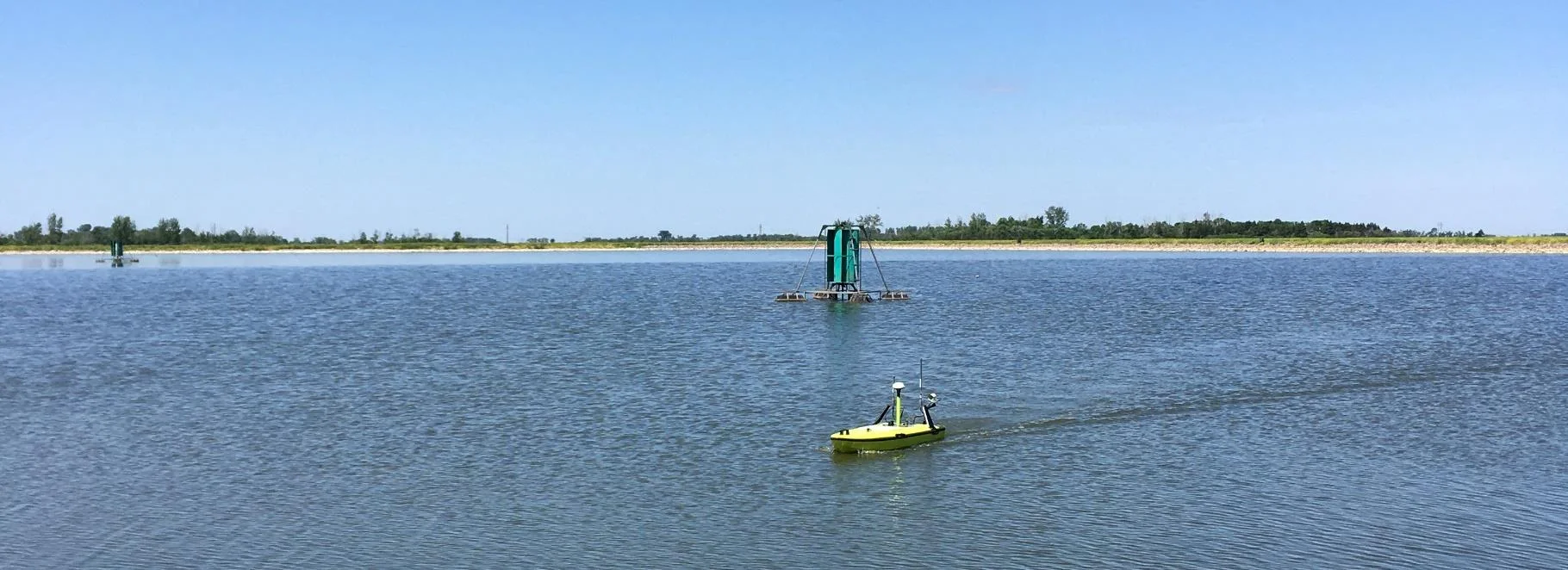
3 Nov 2021
CEE-USV™ monitors sludge reduction in Minnesota effluent lagoons
TEAM LAB Chemical runs about 130 CEE-USV™ lagoon surveys a year in Minnesota and nearby states. Hydromagic 3D matrix grids give accurate accumulated and removed sludge volumes, compared year to year to evaluate treatments that can cut sludge volumes by up to 80%.
TEAM LAB Chemical runs about 130 CEE-USV™ lagoon surveys a year in Minnesota and nearby states. Hydromagic 3D matrix grids give accurate accumulated and removed sludge volumes, compared year to year to evaluate treatments that can cut sludge volumes by up to 80%.
Read case history →